
🐋 The Whale’s Guide to U.S. Taxes
+ One Legal Method to Spend Less.

Most investors focus on what they earn - not what they keep. In America, taxes are the silent undertow that can drag even the strongest portfolio off course. To swim like a whale, you need to know what kinds of taxes exist, who pays them, and how they impact your wealth.
Core Types of U.S. Taxes
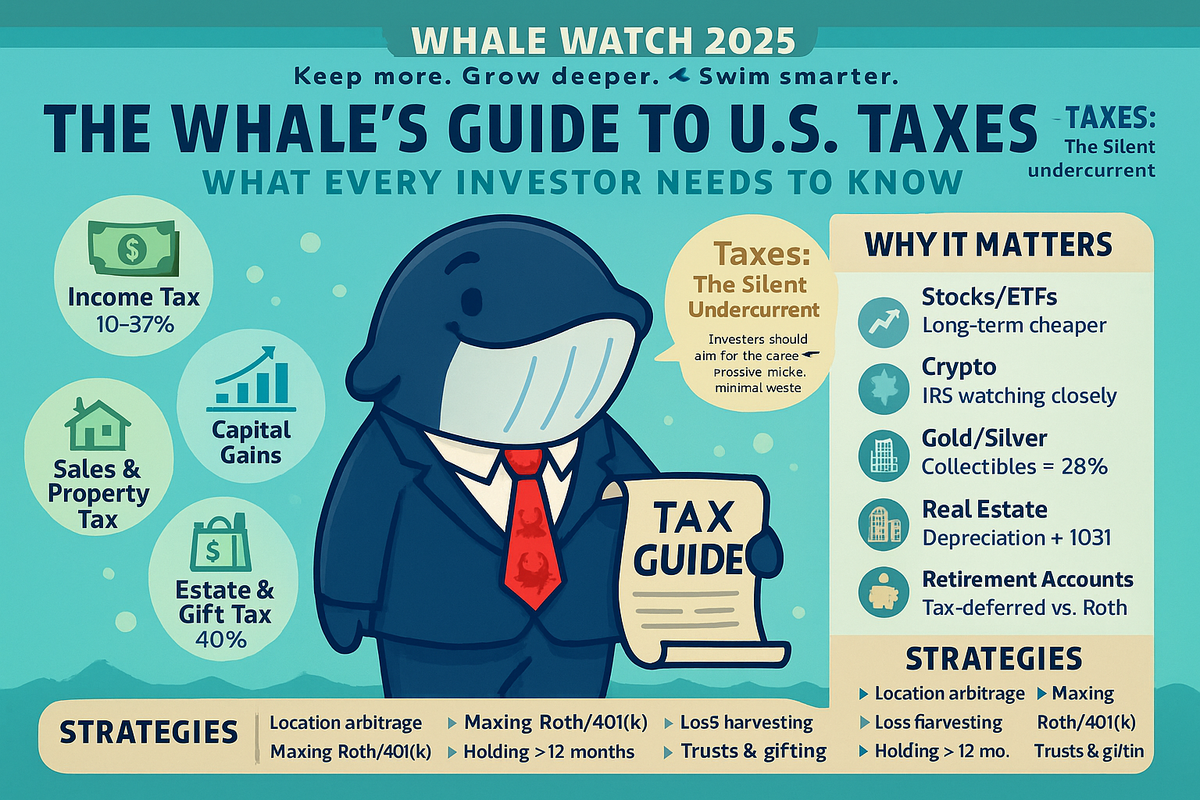
- Income Tax (Federal & State): Paid by individuals on wages, salaries, and investment income. Federal brackets run from 10% to 37%; some states (like Texas and Florida) have no income tax, while California tops out near 13%.
- Capital Gains Tax: Profit from selling assets (stocks, real estate, crypto). Short-term (held <1 year) taxed like ordinary income; long-term (held >1 year) capped at 20% federally (plus 3.8% NIIT for high earners).
- Payroll Taxes: Cover Social Security (12.4% split between employer/employee) and Medicare (2.9% total, plus a 0.9% surtax for high earners).
- Corporate Tax: Currently 21% at the federal level, with additional state levies.
- Estate & Gift Tax: Transfers above ~$13M per person (2025 threshold) taxed at up to 40%.
- Sales & Property Taxes: Local burdens that vary wildly. Sales tax can reach 10%+; property taxes depend on location and home value.
Why Taxes Matter for Investors
- Stocks & ETFs: Long-term holding = lower rates, short-term = high hit.
- Crypto: Same as capital gains; plus IRS is watching wallets closely.
- Gold & Silver: Classified as collectibles → taxed up to 28% on gains.
- Real Estate: Can benefit from depreciation write-offs and 1031 exchanges.
- Retirement Accounts: IRAs/401(k)s defer taxes; Roth accounts grow tax-free (if rules followed).
The Whale’s Warning
Americans already spend thousands each year just to keep up with taxes. But here’s the kicker: banks quietly take even more through high-interest debt. My friends at Finance Buzz just showed me a unique offer that can help almost anyone stop overpaying.
Ad by Finance Buzz
Paying 20%+ interest isn’t “debt management.” It’s a rigged game.
Banks profit while you sink.
But there’s a way out:
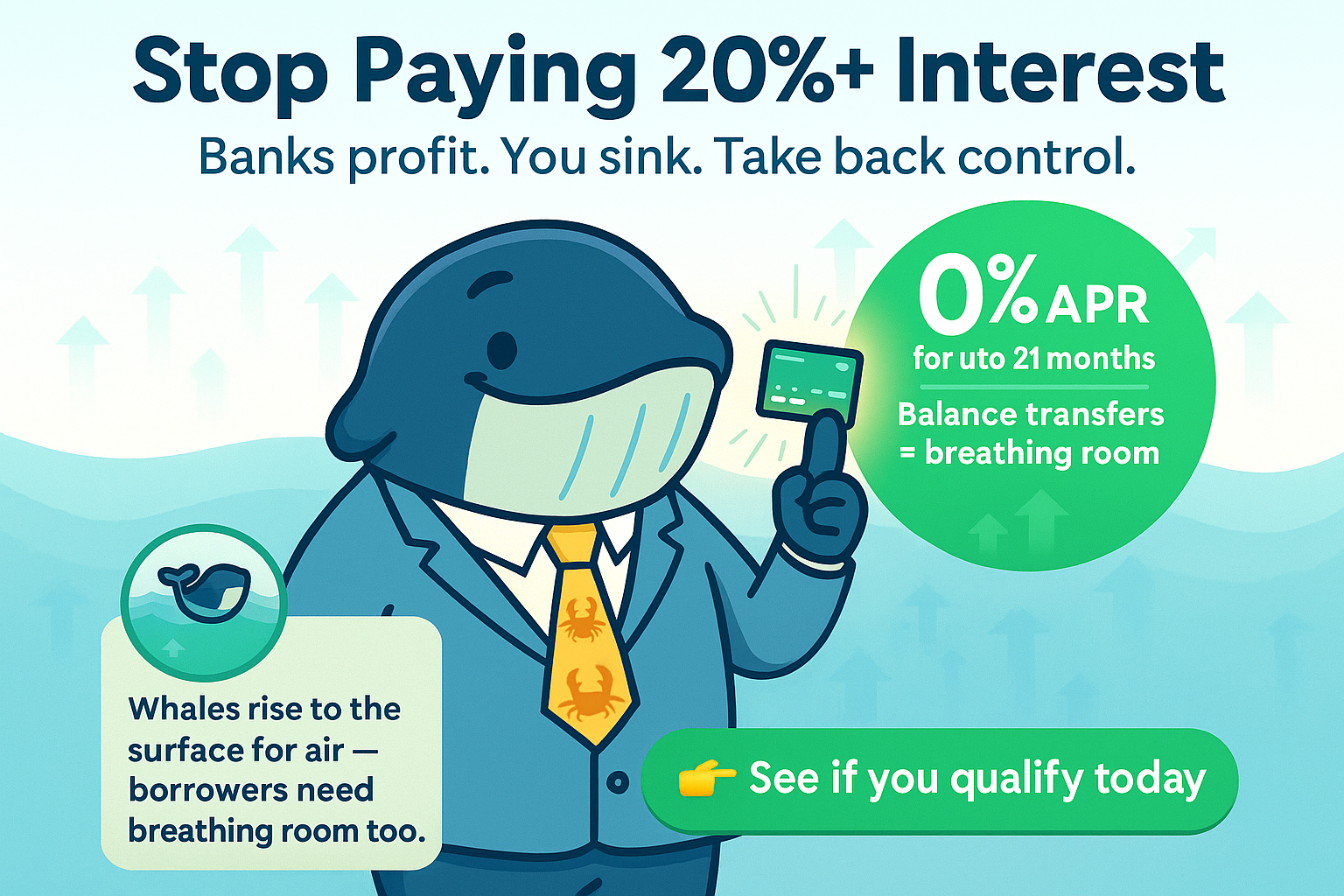
A 0% APR card for up to 21 months on balance transfers.
That’s nearly two years of interest-free breathing room.
Click here to see if you qualify and stop paying for their mistakes.
Strategies Whales Use
Location Arbitrage: Living or spending time in no-income-tax states.
Tax-Advantaged Accounts: Maxing Roth IRAs, HSAs, 401(k)s.
Harvesting Losses: Selling losers to offset winners.
Timing: Holding assets for >12 months to qualify for long-term rates.
Legacy Planning: Trusts and gifting strategies to manage estate tax exposure.
🌊 Whale’s Fact Break
Blue whales eat up to 4 tons of krill per day, but they do it with efficiency — filtering thousands of gallons of water through baleen in minutes. Investors should aim for the same: massive intake, minimal waste.
🐋 Whale’s Final Word
The U.S. tax code is complicated, but it’s not unbeatable. Smart investors use the rules to their advantage, minimize unnecessary losses, and make sure their money is swimming in the right direction. Combine that with avoiding bank traps, and you’ll have more resources to grow your wealth — instead of feeding someone else’s system.
- Whales Investing 🐋