🐋 The Guns Went Quiet and Oil Fell Seven Percent. The Chips Fell Too.
A pause in the strikes on Iran handed markets a relief rally over the weekend — crude down, gold up, stocks bid.


Desmond Hawk | July 24, 2026
Over the weekend the United States paused its strikes on Iran, after thirteen days, to give negotiations room to breathe. The market read it as the beginning of the end and moved accordingly: Brent crude fell about seven percent from Thursday’s peak, gold ticked up off its lows, the dollar softened, and equity futures rose. A textbook relief rally.
Two things kept it from being a clean one. First, this is a pause, not a settlement — Iran has denied agreeing to any ten-day truce and says there are no talks with Washington underway. Second, and more revealing for investors, the chipmakers refused to join the party. That refusal is the most useful signal of the day, so let’s start with what actually moved.
One. The war premium unwound almost as fast as it built
Ten days ago Brent sat near $71. On Thursday it closed above $100 for the first time since May, driven by missile strikes on Saudi tankers and a near-total halt of traffic through the Strait of Hormuz. This morning it's back around $89 to $92, having shed roughly seven percent as the pause took hold.
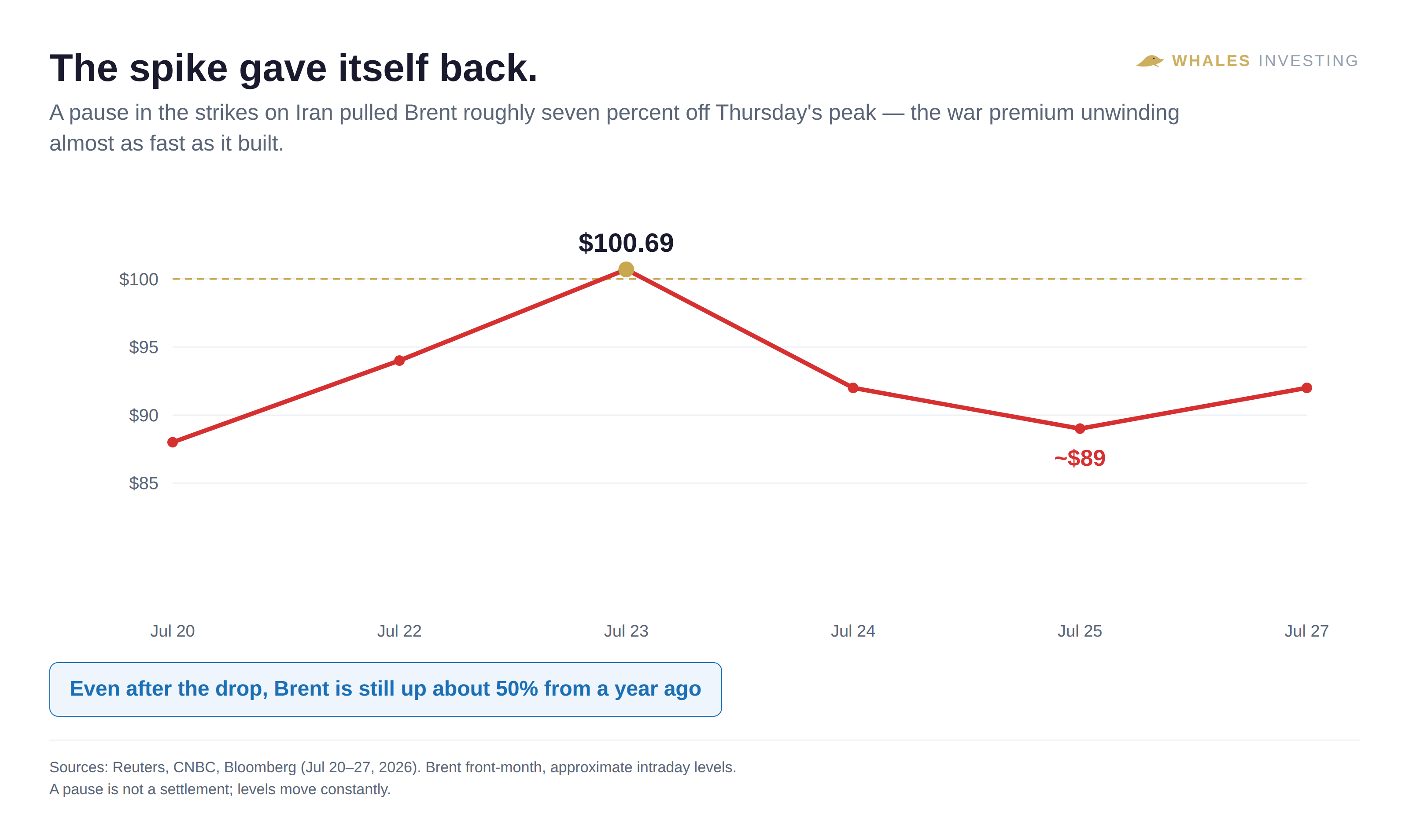
The speed of the round trip tells you how much of that spike was fear rather than physical shortage. But notice what hasn't reset: fewer than ten tankers crossed Hormuz over the weekend, against a normal hundred or so a day, and the strait doesn't refill the moment a ceasefire is rumoured. Deutsche Bank has flagged the risk of simultaneous disruption across the Gulf and the Red Sea. Even after the drop, Brent is still up about fifty percent from a year ago. The premium came down; it did not disappear.
Two. Everything rallied except the one thing that mattered
Here's the day's real tell. The pause lifted almost every risk asset — and then ASML, the Dutch company that makes the machines that make the most advanced chips, fell more than seven percent. The Nasdaq turned red with it, even as the broader relief held.
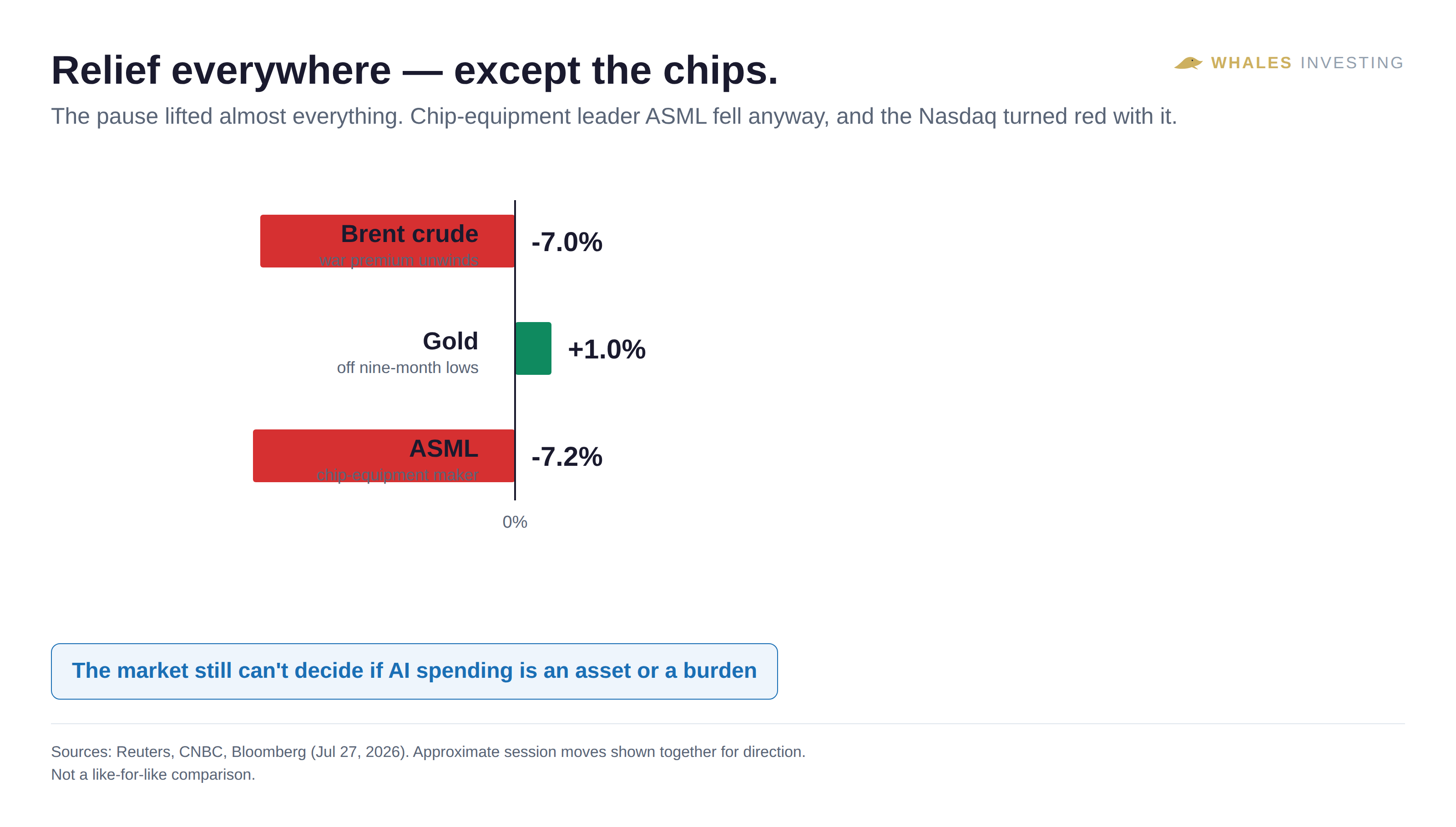
This is the same argument the market has been having with itself for two weeks, and it still hasn't reached a verdict: is the enormous spending on AI an asset that compounds, or a bill that eventually comes due? When a chip-equipment leader falls on a day designed for buying, the market is voting — quietly — for "bill." And the moment you frame it as a bill, the question becomes where the durable value sits. That's the thread running through the first pitch crossing my desk this week, which points not at the chips but at the power underneath them.
The named backers there are real institutions and the geothermal idea is a serious one; the "August 18 catalyst" is marketing framing around a date, and I'd treat a promised catalyst as exactly that until it arrives. The underlying point — that AI's constraint is power, not just silicon — is one I've made here in my own words all week.
Three. Into all this, the Fed — and the quarter’s biggest week
The timing could hardly be more concentrated. The Federal Reserve meets tomorrow and Wednesday, its first decision under new chair Kevin Warsh, who has signalled he'll offer markets less hand-holding than his predecessor. A fifth straight hold is expected, with rates at 3.50 to 3.75 percent. Markets put only about thirty percent odds on a hike this week — but near eighty percent by September, a number that has climbed steadily as oil and tariffs fed the inflation picture.
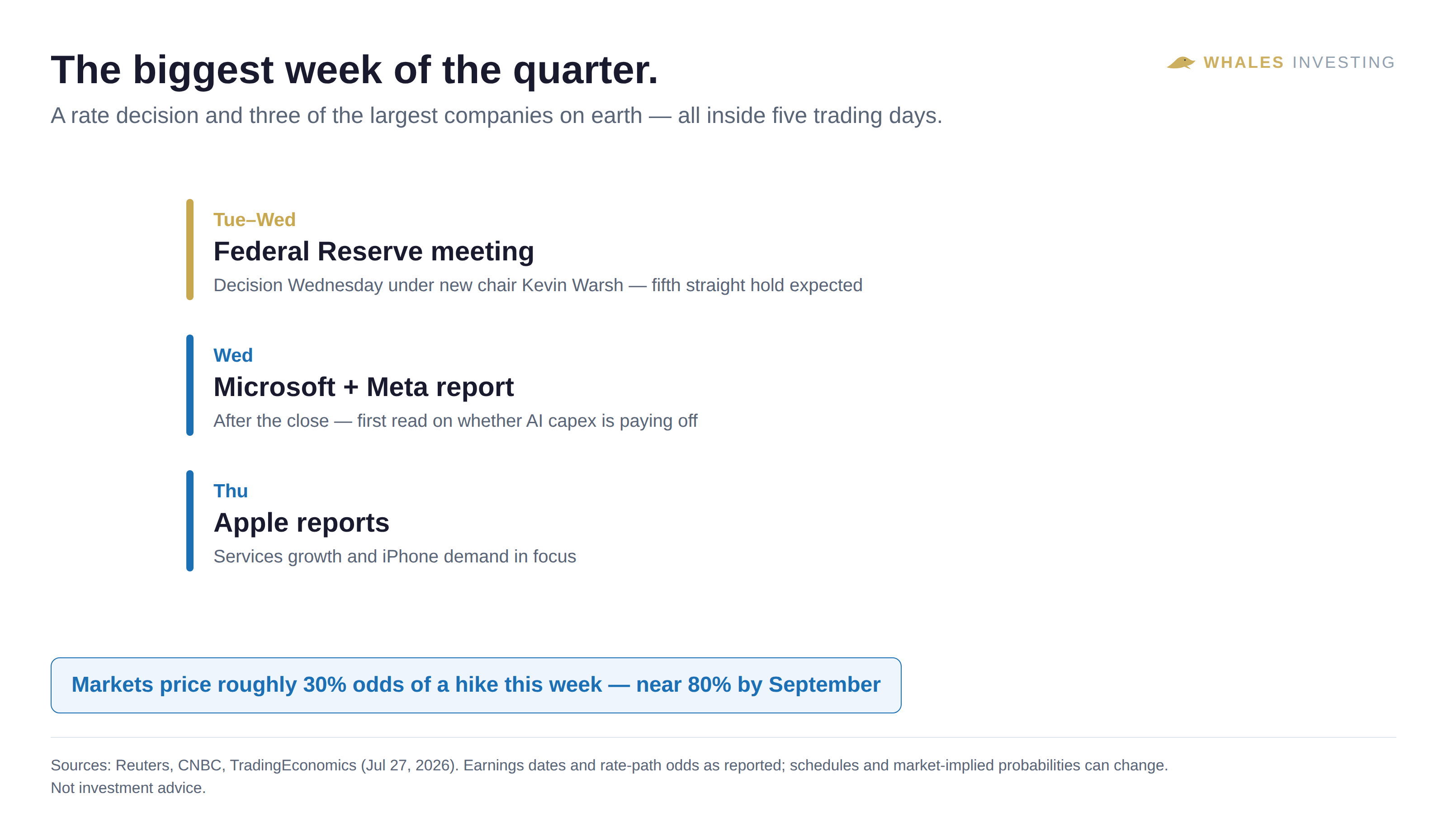
And it isn’t only the Fed. Microsoft and Meta report Wednesday, Apple on Thursday — three of the largest companies on earth, delivering the first real read on whether all that AI capital spending is translating into results. After the way the market treated Alphabet last week — a clean beat sold off because the spending plan rose — those reports carry unusual weight. A rate signal and the megacap verdict, inside five trading days.
For a reader closer to retirement than to a trading desk, weeks like this are noisy in a way that invites mistakes. That’s the backdrop against which the next pitch arrives — one arguing for a single durable holding rather than a reaction to the week’s headlines.
SPONSORED
By any conventional wisdom, putting 60% or your money into a single stock sounds crazy.
But that’s what one of the most famous investors in America did with the stock I’m going to tell you about today.
And yes, I’m going to give you the name and stock ticker symbol for this company, totally free of charge. No credit card or e-mail address required.
Why am I doing this?
Because while I’m not recommending you put half your money in this stock, I do believe this is one of THE best retirement stocks in America today.
In short, it’s a business few have heard of, but EVERYONE should own.
It’s an incredible business... a company unlike any other in America.
The returns for this business are massive (more than Apple, Amazon, and the S&P 500 combined in recent years )... the dividends could be massive too... and the best part of all is that the next few years could be even more lucrative than the recent past.
And that’s because the assets this company owns are critical for America’s two most important industries right now (yes, AI is one of them).
That’s why, besides Berkshire Hathaway, I believe this might be the “Greatest Retirement Stock in America” today.
To learn more, click here to get my full write-up and the name and ticker symbol of this amazing stock, totally free of charge. Again, no credit card or e-mail required.
"More than Apple, Amazon and the S&P combined" and "dividends could be massive" are the sort of claims I won't repeat or endorse — and note the writer's own hedge, that he isn't actually recommending you concentrate like that. The durable idea buried in the sales language is simply that owning a real business for years tends to beat trading a week. On that much, at least, we agree.
Four. And the listings keep coming
Underneath the week’s noise, the private-capital queue hasn’t paused. Anthropic — the AI company behind Claude — is still pointed at a Nasdaq debut as soon as October, at a valuation reported near $965 billion, with secondary markets pricing it above a trillion. Its nearest preview arrives sooner: SpaceX, which listed in June and has since traded around and below its $135 IPO price, reports first earnings on August 6, the same day its lock-up expires and early holders can finally sell.
That appetite for anything labelled pre-IPO is precisely what the last pitch this week is built to catch.
SPONSORED
See This Valley in Utah?
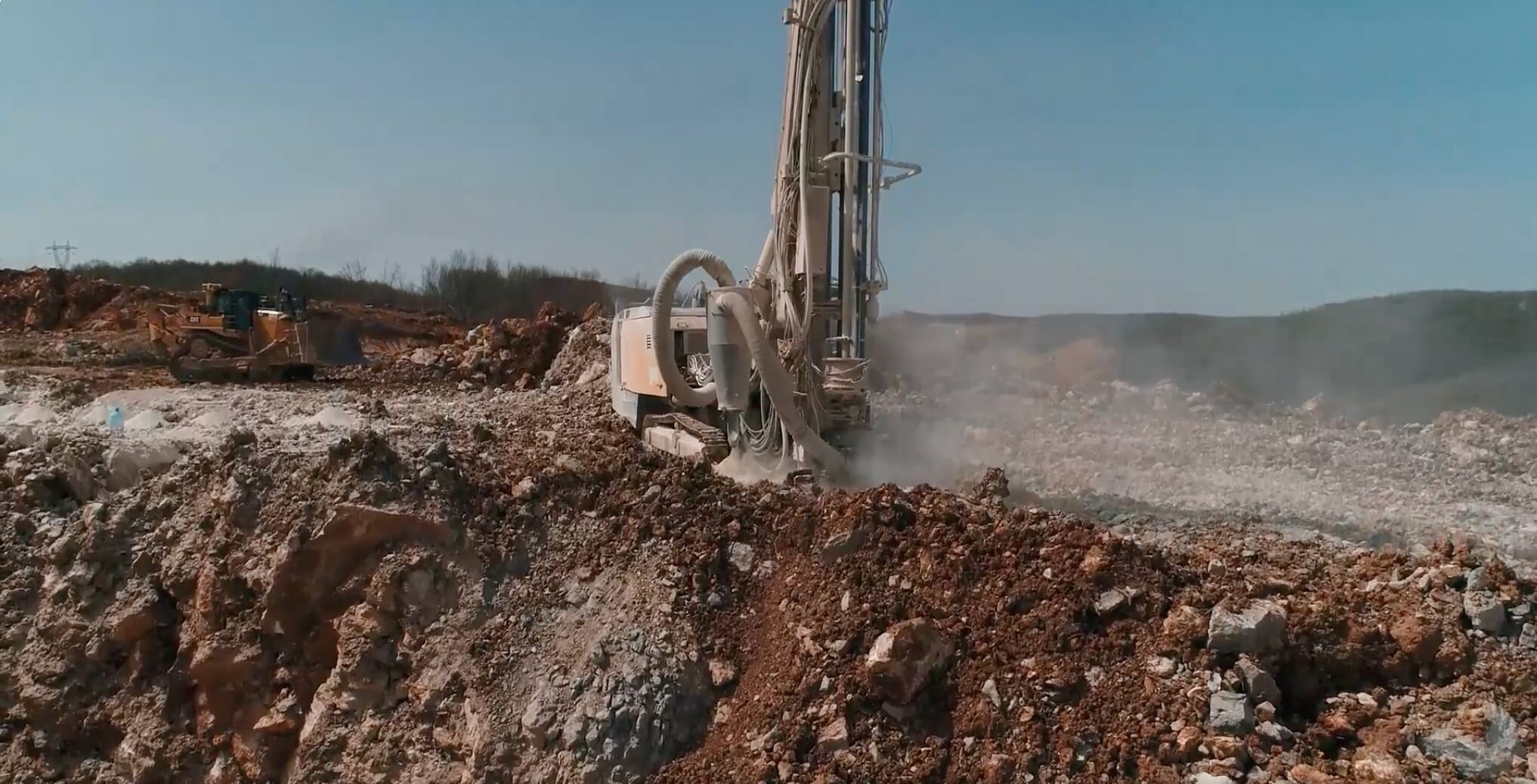
For decades, the energy beneath it was considered unreachable.
Then one drilling crew finally broke through.
Now Google, Berkshire Hathaway, the Pentagon, and the DOE are helping push the technology forward.
A reserved ticker is not a listing, and a Regulation A+ round is not the same thing as the institutional IPOs I described above — the company's own disclaimer says as much, plainly, and it's worth reading. A valuation set by the issuer, with no public market yet, is a very different risk from a stock you can sell tomorrow. The countdown to July 30 is real; whether it should mean anything to you is a separate question entirely.
A ceasefire rumour can move oil seven percent in a weekend. It can’t tell you whether the AI build-out is an asset or a bill — and that, not Iran, is the question the tape is really wrestling with.

Analyst's Note. Three promotions ran above — Utah geothermal, a “greatest retirement stock,” and a pre-IPO round closing Wednesday. Each is selling something, and each borrows its urgency from something genuinely happening this week. So separate the two. What’s real: the strikes paused and oil gave back most of a forty-percent spike, yet chips fell on a day made for buying; the Fed decides Wednesday under a new chair with hike odds near eighty percent by September; Microsoft, Meta and Apple report into a market that just punished Alphabet for spending; and a near-trillion-dollar listing waits behind an August 6 SpaceX print. What’s marketing: catalysts on promised dates, combined-return boasts, and reserved tickers dressed as listings. The through-line I’d carry is the one the chipmakers drew for you — the market is quietly repricing AI spending from asset toward bill, and that reprice matters more to what you own than any weekend ceasefire headline.
The Bottom Line
The weekend delivered a genuine relief rally, and it deserves to be taken at face value: less war risk is good news, and cheaper oil eases one of the two inflation pressures that had the rate market leaning hawkish. That’s real, and it’s welcome.
But a pause is not a peace, Hormuz is still barely moving, and the more durable story sat in the one corner that didn’t celebrate. When chip-equipment leaders fall on a relief day, and three megacaps are about to report into a Fed decision, the market is working through a bigger question than any ceasefire — whether the money pouring into artificial intelligence is building value or building a bill.
Protect first. Position for the regime you’re actually in, and don’t let a two-day rally talk you out of the question the chipmakers just asked. Because the capital you keep is the only capital that compounds.
— Hawk