
🐋 Oil Ran to 91 Dollars, Then Gave It All Back in a Day. Here's What It Broke.
The Gulf spike lasted hours. The damage didn't. That round trip lit an inflation fuse, cracked gold's paper price, and pushed the thirty-year yield back above 5% — four numbers that are really...


Desmond Hawk | July 21, 2026
Oil ran from about 72 dollars a barrel up toward 91 on a Gulf shock this week — then handed almost all of it back within a day, settling near 80. The spike was over in hours. What it set in motion wasn’t. That single round trip is the thread running through the other three numbers that moved this week and got reported on their own: retail dumped 74 tonnes of gold while central banks kept buying, the trillion-dollar AI IPO line kept growing, and the thirty-year Treasury yield pushed back above 5%. Each made its own headline. None got connected. Let me connect them — because the loudest number, gold falling, was the least important, and the smart money spent the week repositioning while the crowd stared at the scary print.
One. The gold selloff was a rate scare in disguise
The first casualty of that oil spike was gold — but not the way the headlines framed it. When energy jumps, the market braces for inflation, and it now prices a September rate hike at roughly sixty percent. Higher rates make a metal that pays no interest look less attractive, so traders sold. Gold slid toward $4,000, and every financial screen flashed the same alarming red.
Here’s what those screens left out. The selling was concentrated in the paper market — futures and ETFs — where positions can be dumped in seconds on a macro headline. North American ETFs shed roughly 74 tonnes in June, their weakest first half since 2013. That’s fast money reacting to a rate fear, not a verdict on gold itself.
And the buyers who move slowly? They didn’t flinch.
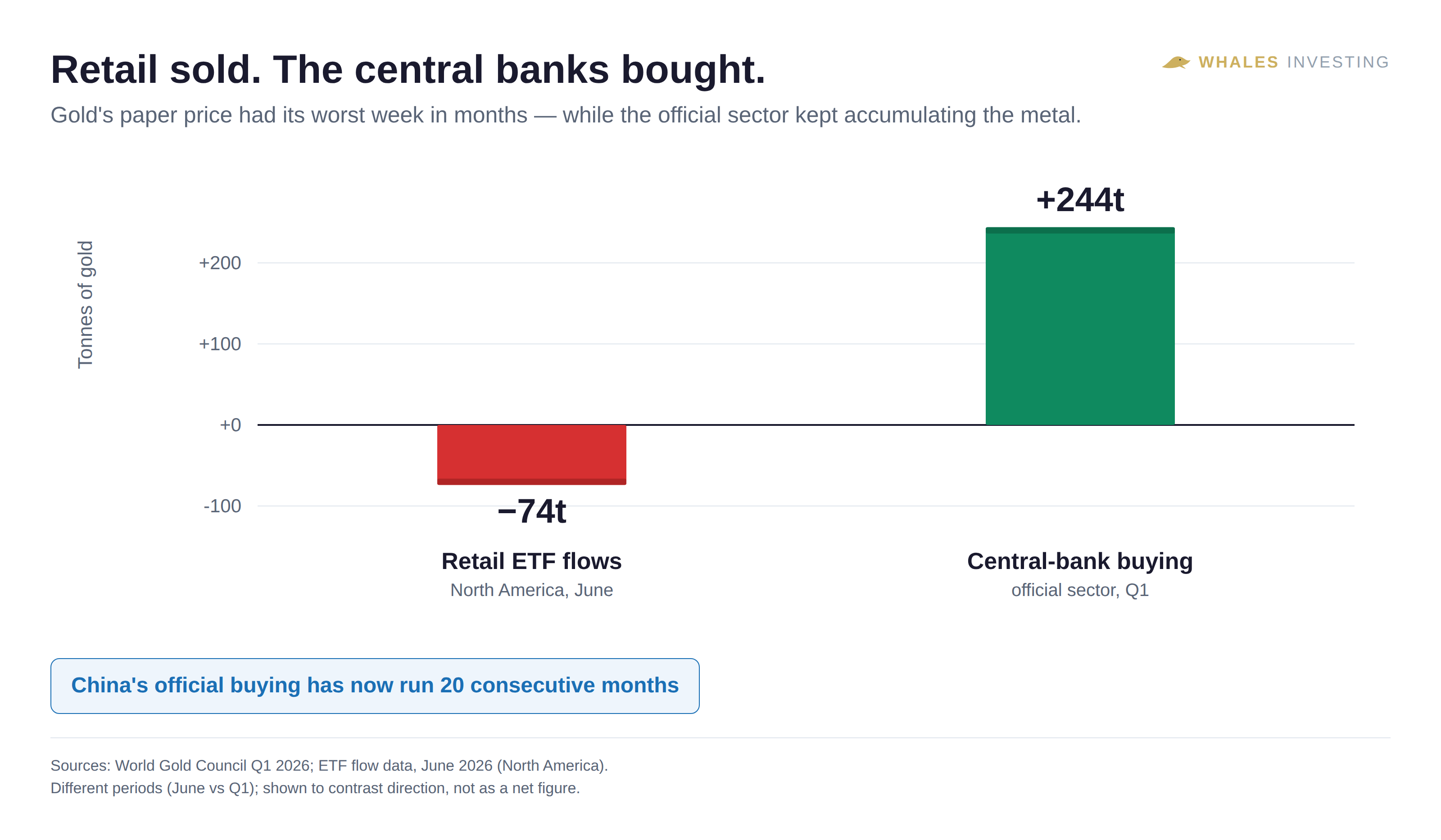
Central banks added roughly 244 tonnes in the first quarter. China’s official buying has now run twenty consecutive months; Poland has been adding all year. This is the most patient, best-informed money on earth, and it kept accumulating physical metal at prices near record highs — straight through the rate scare that sent the ETF crowd running. Retail traded the headline. The official sector traded the trend. That gap is exactly what one gold analyst has been hammering on, and he ties it to a law most people have never heard of.
SPONSORED
In 1872, President Ulysses S. Grant signed a law called the General Mining Act.
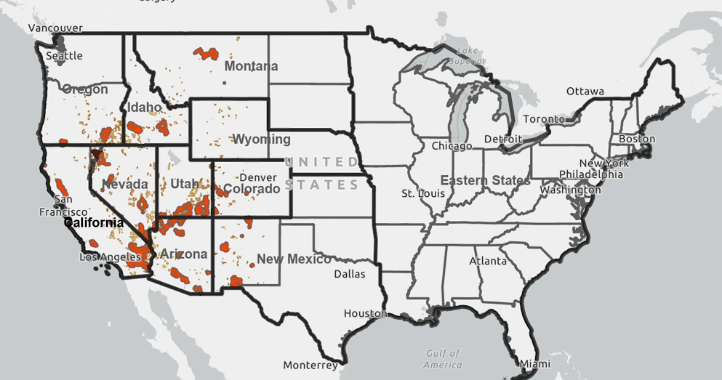
Its purpose was simple: encourage Americans to settle the West by letting them stake claims on federal land and keep the minerals they found.
Gold. Silver. Copper. Every ounce.
No split with the government. No hidden royalties.
154 years later, that law is still on the books.
Congress has tried to kill it. Environmental groups have pushed for repeal. Regulators have tried to restrict it.
Every attempt has failed.
The law remains fully in force today.
And with gold hitting record highs — up 161% in recent years — while central banks around the world quietly hoard every ounce they can get…
This forgotten statute may be more valuable now than at any point in American history.
But here's the thing — you don't need a pickaxe or a 4x4 to profit from it.
Dylan Jovine found a much simpler way.
Whether you act on that or not, the underlying fact holds: the official sector is buying what retail is selling. That’s the first thread. The second is the one that lit the fuse under everything else this week.
Two. Oil’s round trip — and why the reason matters more than the price
Oil went on a violent round trip. Brent ran from about $72 up toward $91 intraday as the U.S.–Iran ceasefire collapsed — nine straight nights of strikes, four tankers seized near the Strait of Hormuz, a strike on a Kuwait Petroleum facility — then gave most of it back within a day, settling near $80.
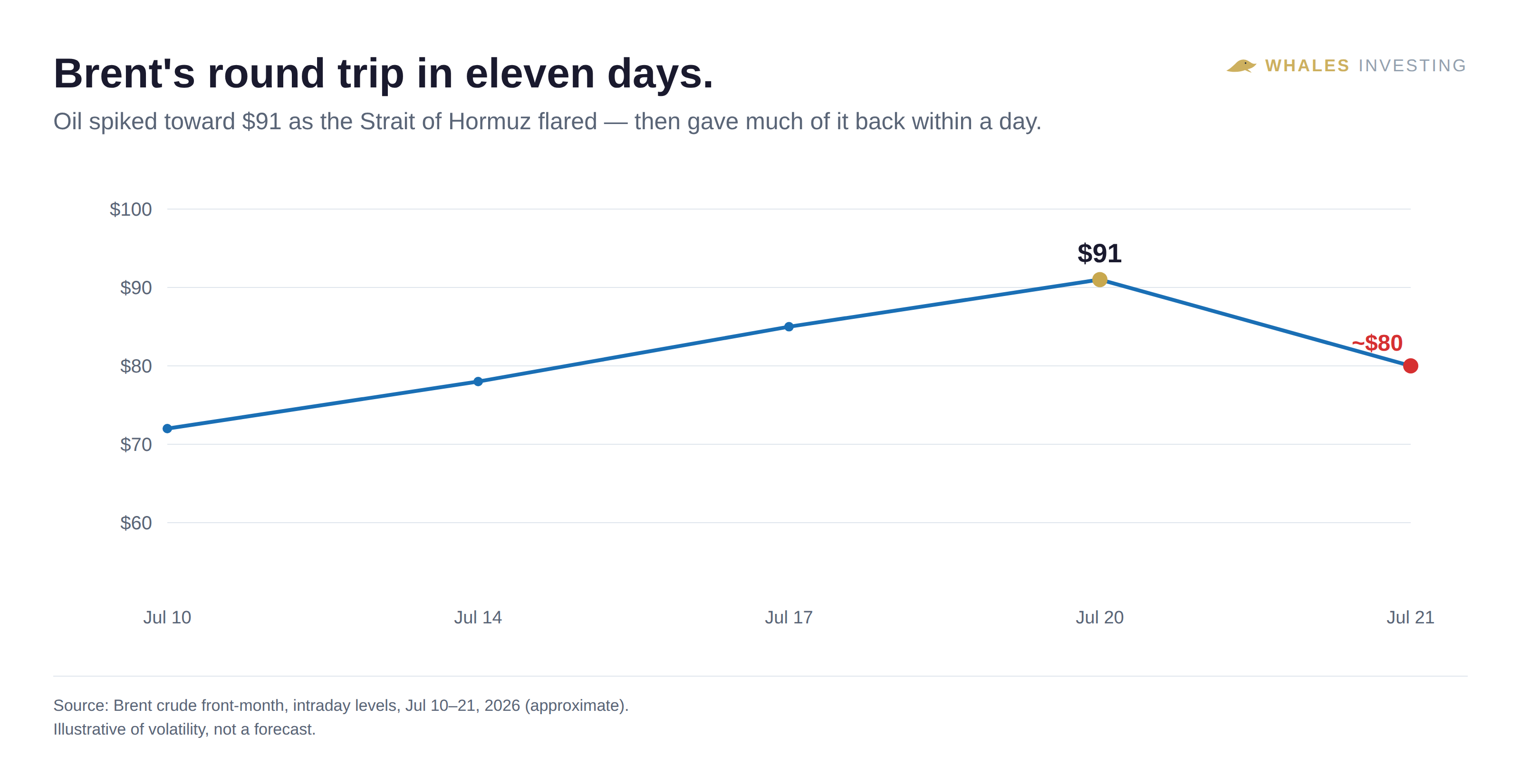
I’m not going to dramatize the conflict; people are living through it and it deserves better than a trading hook. What matters for your money is narrow and mechanical: energy is an input to nearly everything, so an oil spike is an inflation spike with a delay. That’s the real reason the September-hike odds jumped, and the real reason gold’s paper selloff and the bond move happened in the very same week. One shock, radiating outward. And the whipsaw itself — up 25% then down 12% in days — is the kind of move that punishes anyone frozen at the wheel, which is precisely the angle one veteran trader built his pitch around.
SPONSORED
When oil dropped 10% in five days, did your portfolio move at all?
That's the trap with oil stocks — they lag crude by weeks, sometimes months.
Larry Benedict made $95 million for clients in the 2008 crash by trading volatility, not direction.
His current method targets the swing through defined-risk options, with a known max risk set before the trade is placed.
Past plays have shown $3,880, $4,354, and $6,268 on individual oil setups — past results, not return promises.
Goldman just cut Brent to $80 for Q4 — from today's $72, that's an 11% move waiting in either direction.

Will you watch it on CNBC, or learn how to position before the window closes?
You don’t have to trade a single oil contract to take the point seriously: this was an inflation shock wearing an oil costume, and it’s the reason the Fed conversation shifted hard toward hikes. Which brings us to the third thread — the one pulling capital in the opposite direction.
Three. The biggest companies in the world are still lining up to go public
While gold and oil grabbed the headlines, the IPO pipeline kept swelling into something the market has never had to absorb. SpaceX went public on June 12 at roughly $2.1 trillion — the largest listing in history — opened near $225, and has since been dragged back to around $153. That round trip is its own lesson in how these debuts actually trade.
Behind it, Anthropic — the maker of Claude — is now reportedly targeting a public listing as soon as October at a valuation near $965 billion, with Goldman, Morgan Stanley and JPMorgan already lining up investor meetings. OpenAI slipped its own debut to 2027. Put the pipeline together and it could demand well over $200 billion from public markets; the entire U.S. IPO market raised about $45 billion in all of 2025.
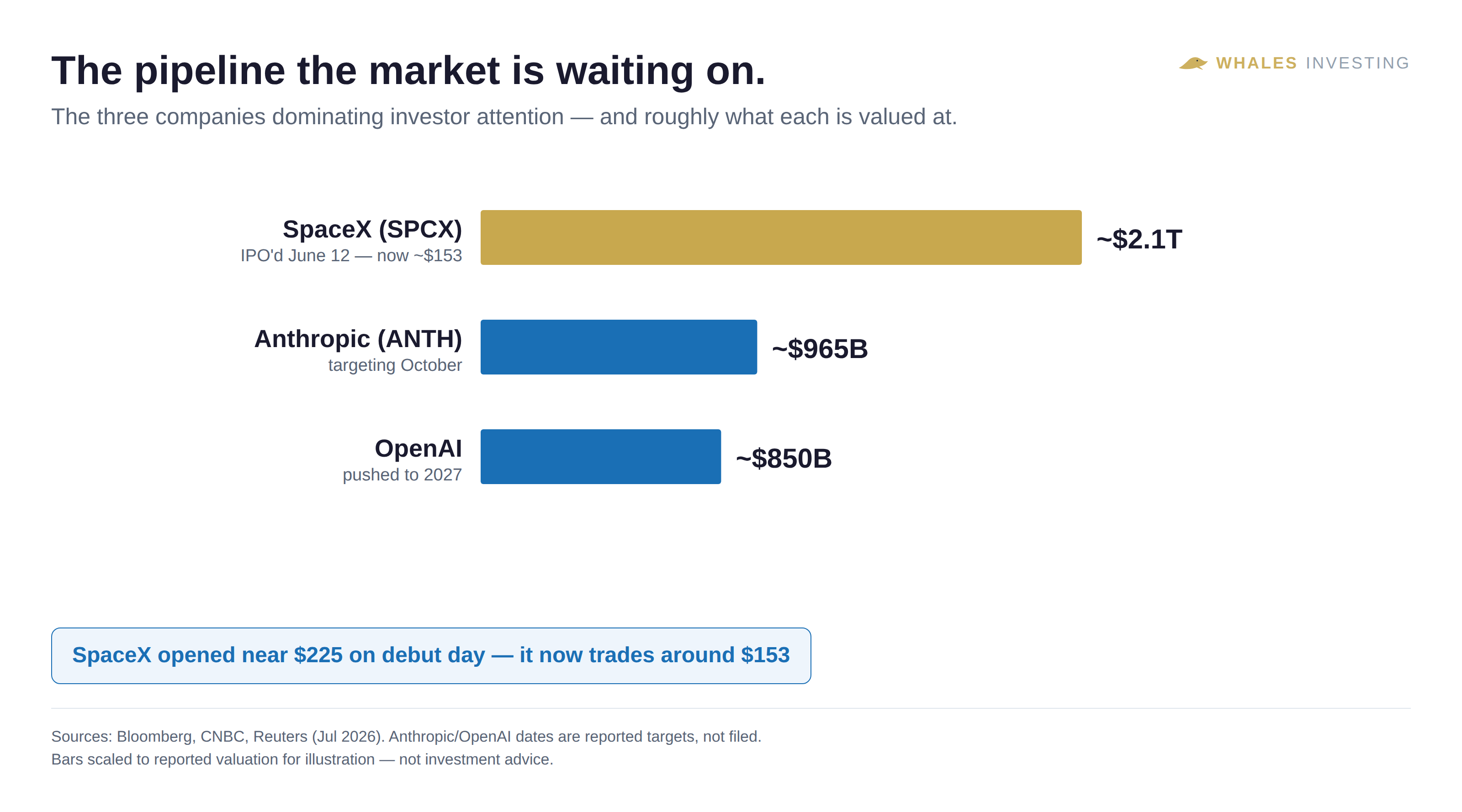
This matters even if you never buy a share of any of them. A pipeline this size pulls capital toward itself and sets the tone for risk appetite everywhere — and it helps explain the odd action in tech this week, where the chip index fell about 20% from its June high on fears that AI spending might slow, even as the private AI names marched toward the exit at record valuations. When the obvious trade gets crowded and then cracks, attention turns to who’s really getting paid — which is the exact angle one veteran tech analyst built his latest briefing around.
SPONSORED
Everyone chased the rocket ship. Almost nobody looked under the hood.

On SpaceX IPO day, trading volume exploded past 500 million shares.
Investors stampeded into the obvious name.
They chased SpaceX at the open…
Watched it rocket to $225…
Then watched it get dragged back toward $154.
That is how the crowd usually plays these stories.
They buy the name everyone knows.
They ignore the quiet company making the whole machine work.
And according to Michael Robinson, that may be the biggest mistake investors are making right now.
Because one little-known supplier has reportedly shipped 7.5 billion chips into SpaceX's Starlink network.
Not million.
Billion.
And while SpaceX already had its massive public-market moment…
This hidden supplier may still be flying under Wall Street's radar.
Michael calls it the potential "Broadcom of SpaceX."
And he just released the full details in a new Disruptors & Dominators briefing.
Click here to see the hidden SpaceX chip supplier now.
Because the crowd already chased SpaceX.
But the supplier story may still be early.
And when Wall Street finally connects the dots, today's quiet setup could get very loud, very fast.
Whatever you make of any single pitch, the structural fact under all three is the same, and it shows up in one honest number.
Four. The number that ties it all together
The thirty-year Treasury yield pushed back above 5% this week — near its highest since 2007. That’s the interest rate the U.S. government pays to borrow for a generation, and it’s climbing even though June inflation came in soft. Normally cooler inflation pulls long yields down. This time they rose anyway.
When long-term borrowing costs rise while inflation cools, the driver is usually something other than inflation is at work: too much new government debt hitting the market at once, foreign buyers stepping back from Treasuries, or lenders simply demanding more to fund Washington for three decades. And that lines up with everything else that moved. The same foreign central banks trimming Treasuries are the ones stacking gold. The oil shock that scared the rate market also pressures the dollar’s role in energy trade. The IPO wall competes for the same pool of capital. The 5% yield isn’t a fourth story — it’s the tab for the first three, and tabs like this don’t shrink because one week’s oil print reversed.
The spike was the headline. The 5% yield was the message — and only one of them will still matter next month.

When long-term borrowing costs rise while inflation cools, the driver is usually something other than inflation: a flood of new debt issuance, weaker foreign appetite for Treasuries, or a market quietly repricing the risk of lending to the government for thirty years. Notice how neatly that lines up with the other three threads. Central banks selling Treasuries and buying gold. An energy shock straining the dollar’s global role. A capital pool so large it’s rearranging risk appetite. The thirty-year yield is where all of that shows up as a single, honest number — and it doesn’t reverse on the timeline of a weekly gold chart.
Retail watches the price. The bond market watches the plumbing. This week, they were looking at two different things.

Analyst's Note. Each of the three briefings above is selling you something, and on a week this jumpy I'd treat every one of them as a sales pitch first and a research idea second — violent tape is when the hard sell works best and clear thinking works worst. Set the pitches aside and the skeleton is still there: an official sector stacking the gold retail is unloading, an oil round trip that left an inflation fuse lit, a chip index down 20% while private AI valuations print records, and a thirty-year yield back above 5% while soft inflation gets ignored. That's not four separate events. It's one strained system showing itself four ways. Metal, options, the supply chain behind the famous names, or just more cash and more patience than the crowd — the expression is your call. My only claim is that the strain is real, and it won't arrive as a headline.
The Bottom Line
The oil spike got the airtime, and it was already over by the time most people read about it. What it triggered wasn’t. The official sector kept accumulating the metal retail dumped into a rate scare; the largest pre-IPO pipeline in history kept pulling at risk appetite; and the thirty-year yield — the number that shows what carrying this much debt actually costs — pushed back above a level not seen since before the last crisis.
Four numbers, one direction. What it costs to hold this system together is rising, and the best-informed money is repositioning quietly while the crowd argues about a spike that already reversed.
Protect first. Position for the regime you’re actually in, and follow the money that moves early rather than the money that reacts to headlines. Because the capital you keep is the only capital that compounds.
— Hawk