
🐋 Inflation 3.4%. Your Raise: 3.2%. Guess Who Loses.
The CPI Landed Perfectly on Forecast — And Real Wages Still Fell 0.2%.


Desmond Hawk | August 13, 2026
Yesterday I wrote that the whole September argument might hinge on a rounding decision. It rounded down. Consumer prices rose 0.1 percent in July, putting the annual rate at 3.4 percent, and the core measure came in at 0.2 percent monthly — 2.5 percent annually, the slowest since March 2021. Every headline figure matched the consensus exactly, which almost never happens. The market got the calm print it had already paid itself for. But a clean report is not the same thing as a comfortable one, and the difference is worth ten minutes of your morning.
One. Prices rose faster than pay. Again.
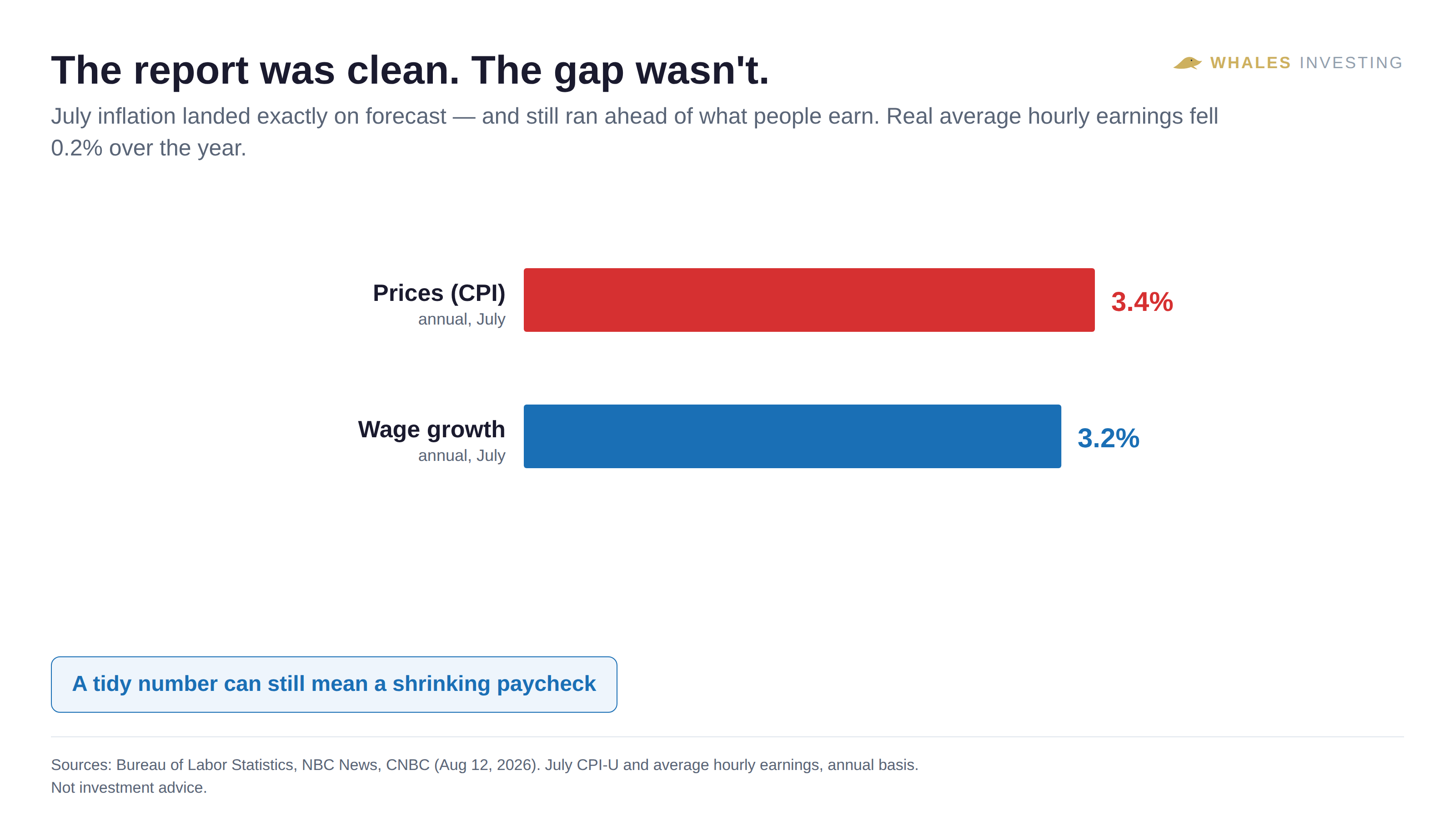
Here’s the line that didn’t make the headlines. Inflation is running at 3.4 percent while wage growth sits at 3.2. That gap has a plain meaning: the average worker’s earnings buy less than they did a year ago. The Bureau of Labor Statistics put it in black and white — real average hourly earnings fell 0.2 percent over the past twelve months. Prices moderating is genuinely good news. It does not undo the ground already lost, and it doesn’t close a gap that is still open.
That squeeze is the reason a second question keeps surfacing in my inbox — not about prices, but about the account holding the money. Payment systems are being modernised everywhere, and the same infrastructure that makes transfers instant also makes them visible and, in principle, interruptible. It isn’t a fringe worry: policymakers across several countries have been open about wanting programmable, traceable payment rails. Martin Weiss has put together his own read on what that could mean for ordinary depositors, and the steps he thinks are worth taking now.
SPONSORED
In a few short months, the US government could make a sweeping change to bank accounts nationwide.
It will give them unprecedented powers to control your bank account.
They could closely track every transaction... even freeze it.
Fortunately, there are 4 simple steps you can take today that could safeguard your savings.
Back to yesterday’s report — because the calm average was hiding some very uneven parts.
Two. Where the inflation actually is
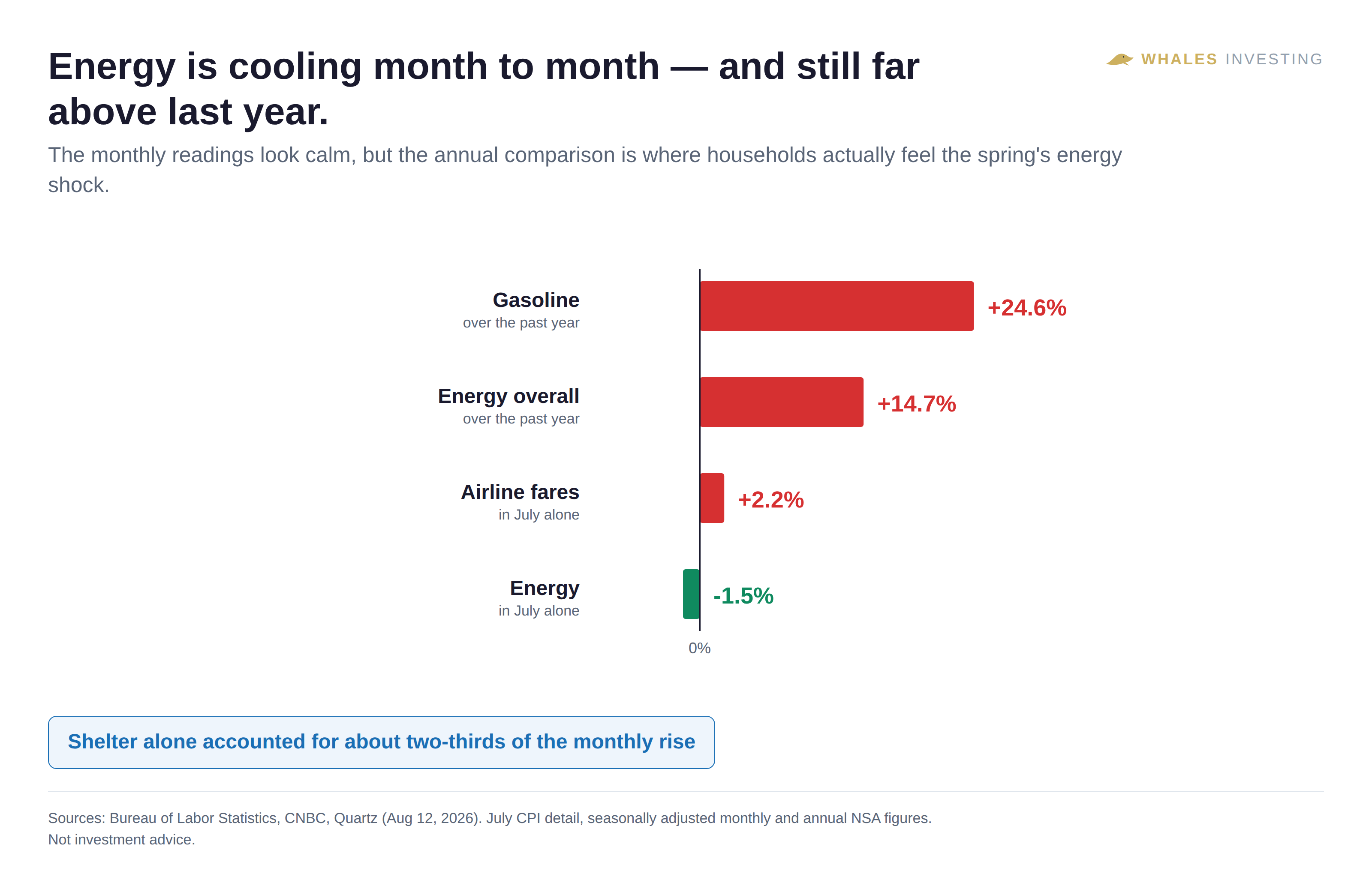
Averages flatten things. Energy fell 1.5 percent for a second consecutive month, which is what pulled the headline down — and yet energy remains 14.7 percent more expensive than a year ago, with gasoline up 24.6 percent over that span. Shelter, rising just 0.1 percent, still accounted for roughly two-thirds of the entire monthly increase. Medical care rose 0.4 percent; airline fares jumped 2.2. So the “cooling” is real at the margin while the level people actually pay stays elevated.
The same force is showing up in the devices people buy. Apple has raised prices on several Macs and iPads, and the reason isn’t tariffs or freight — it’s the AI build-out bidding up memory and storage. Tim Cook described the component market as a hundred-year flood; analysts think it could add $150 to $200 to a future iPhone. That’s the AI boom arriving in your pocket as a bill rather than a feature, and it’s the backdrop for the next item on my desk.
SPONSORED
Apple Stock In the Spotlight After Reportedly Raising Mac, iPad Prices — Tim Cook Calls It a ‘Hundred-Year Flood’
Apple just raised prices on several Macs and iPads.
The reason: AI.
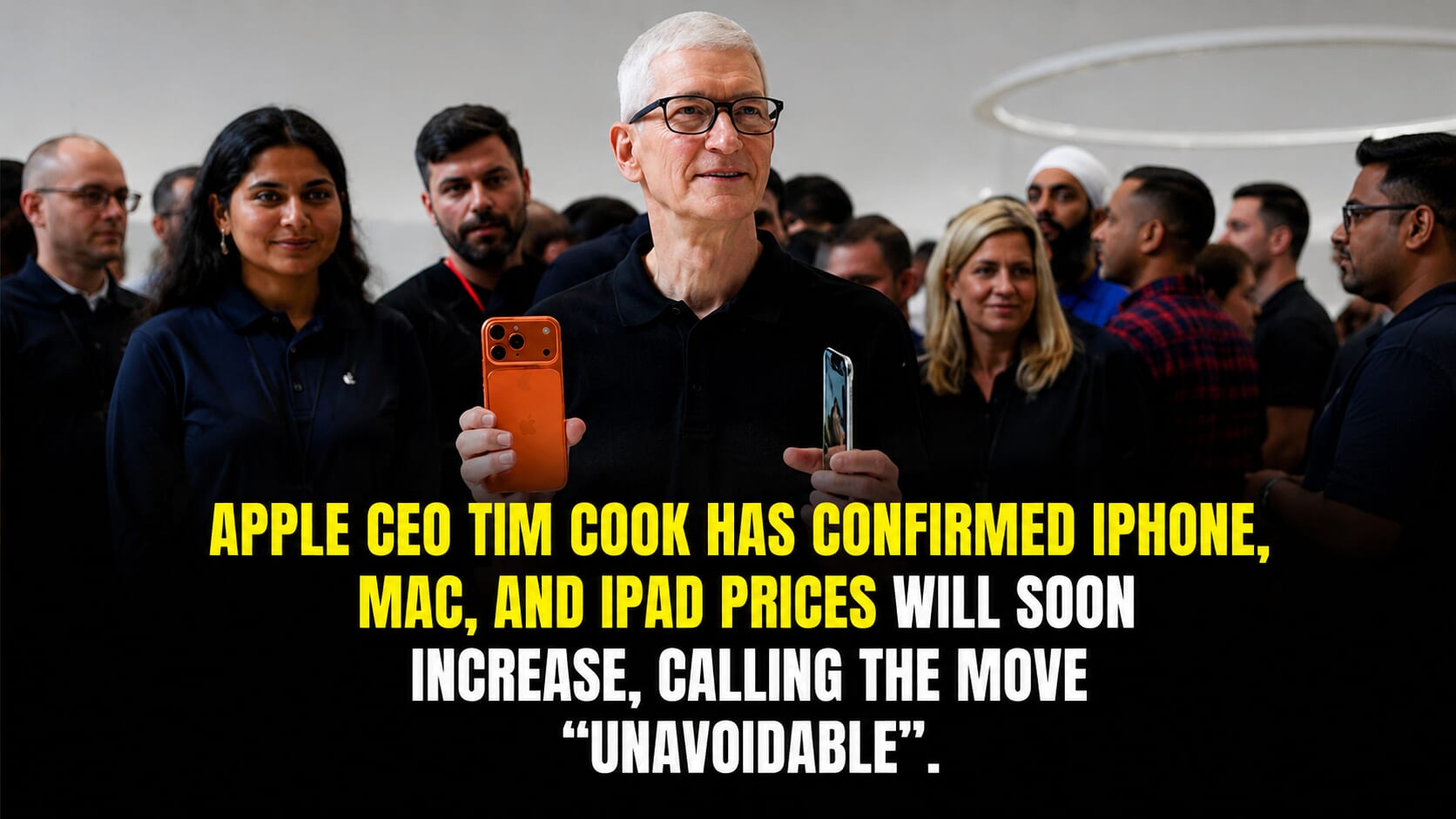
Apple’s rapid expansion of AI data centers has created an extraordinary surge in memory and storage demand.
Component prices have quadrupled, and analysts now expect higher costs could add $150 to $200 to future iPhones.
Translation: AI is not just changing software. It is repricing the hardware in your pocket.
That is why Mode Mobile looks positioned for this moment.
Mode built EarnOS, a platform designed to turn everyday smartphone activity into earnings for users while creating first-party data that may become increasingly valuable for advertising and AI model training.
Most tech companies monetize your attention and data.
Mode shares that value back with users.
The traction is already hard to ignore:
- 490M+ users
- $115M+ cumulative revenue
- $1B+ earned and saved by EarnOS users
- $95M+ raised and 60,000+ shareholders
- Deloitte’s #1 fastest-growing software company in North America, 32,481% growth
- $MODE Nasdaq ticker secured
As devices get more expensive, Mode is moving in the opposite direction: helping phones become income-generating assets.
Investors can still access pre-IPO shares at $0.52 with up to 20% bonus shares.
Please read the offering circular and related risks at invest.modemobile.com.
Mode Mobile received their ticker reservation with Nasdaq ($MODE), indicating an intent to IPO in the next 24 months. An intent to IPO is no guarantee that an actual IPO will occur.
Mode revenue and EBITDA numbers include full year revenue and EBITDA of businesses acquired by Mode Mobile in 2025.
Which brings us to this morning, and the number that completes the picture.
Three. The other half arrives today
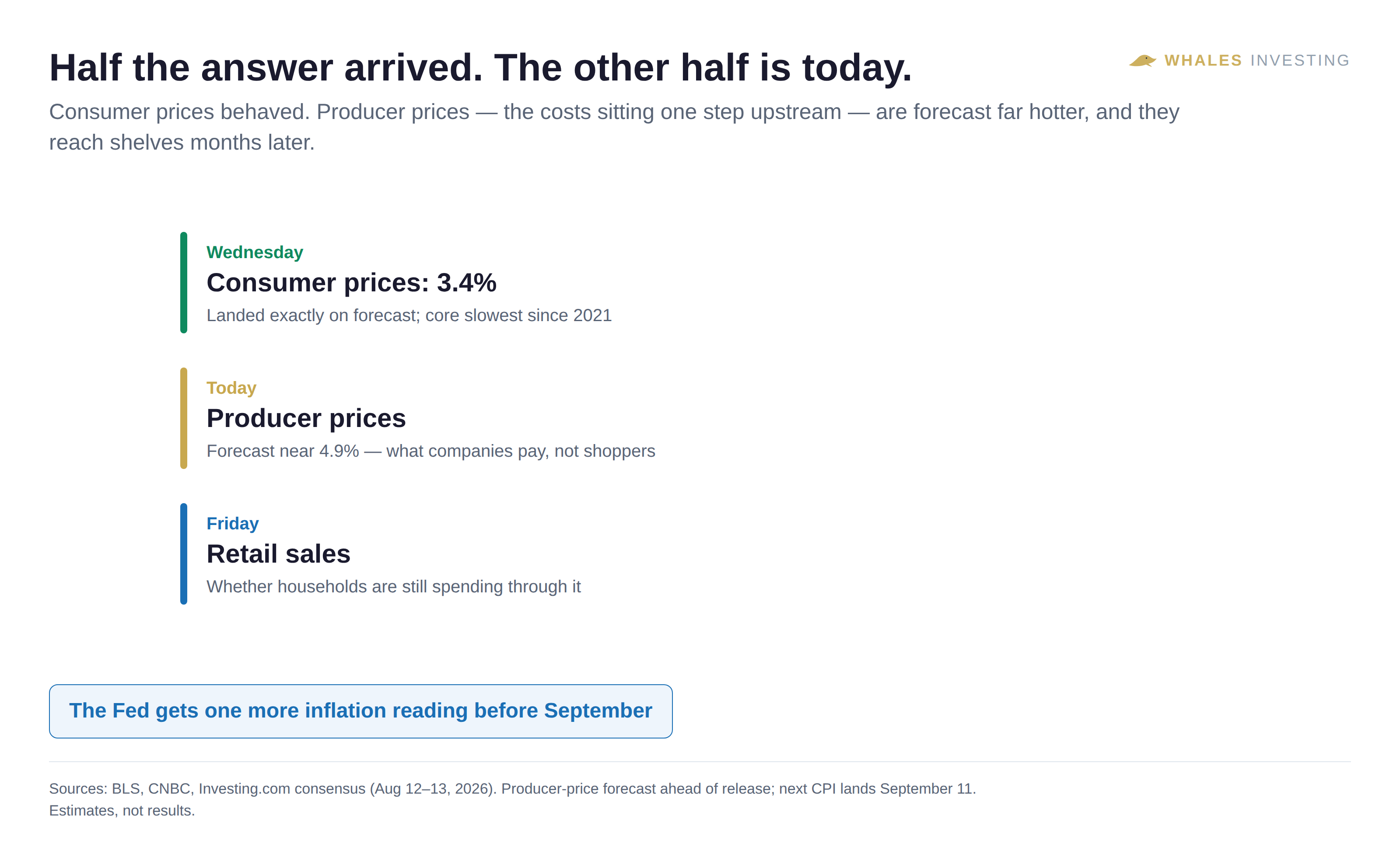
Consumer prices describe what shoppers paid. Producer prices describe what companies paid to make the things shoppers buy — and those are forecast near 4.9 percent when they land this morning. That gap is the pipeline: costs incurred upstream typically reach the shelf three to six months later, absorbed by margins or passed along. Tomorrow brings retail sales, showing whether households are still spending through the squeeze. And the Fed gets exactly one more inflation reading, on September 11, before it decides.
If you’ve been reading these letters for a while, you’ll recognise the shape of this moment: indicators that look fine on the surface, a squeeze that shows up in household budgets rather than headlines, and a central bank without a clear signal to give. Plenty of people are watching the same picture and reaching for the historical parallels — which is exactly what the last item on my desk this week sets out to do.
SPONSORED
Stop.
Before you do anything else today —
Grab this.
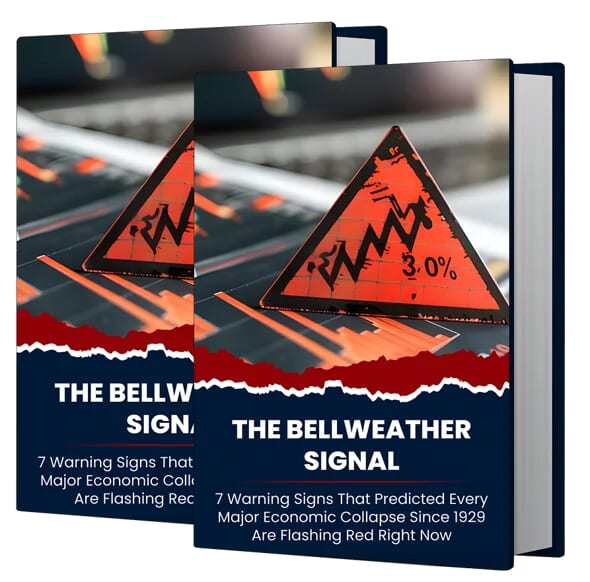
It's called The Bellweather Signal — a report that identifies 7 warning signs that have predicted every major economic collapse since 1929.
All 7 are flashing red right now.
Investment firms pay $5,000+ for intelligence like this.
Financial newsletters sell it for $97.
For the next few minutes — it's free.
No strings. No credit card. No catch.
Just click below, tell me where to send it, and it's yours instantly.
I've helped conservative Americans protect their wealth for 15 years.
This is the most important thing I've ever put together.
And I refuse to let another good person get blindsided by a crisis the insiders already see coming.
The free copies won't last.
The report came in exactly as forecast, and the average worker still ended the year with less buying power than they started it. That’s the whole lesson of this stretch: the number can be fine while the household isn’t.

The Setup. Where things stand this morning: July consumer prices rose 0.1 percent, putting annual inflation at 3.4 percent, down from 3.5. Core rose 0.2 percent monthly and 2.5 percent annually — the slowest since March 2021. Every figure matched consensus. Shelter contributed about two-thirds of the monthly gain; energy fell 1.5 percent for a second month but remains 14.7 percent above last year, with gasoline up 24.6 percent. Wage growth is running 3.2 percent, below inflation, and real average hourly earnings fell 0.2 percent over the year. Producer prices are due this morning, forecast near 4.9 percent. Retail sales land tomorrow. The next CPI arrives September 11, the last before the Fed decides.
The Bottom Line
A report that lands exactly on forecast is rare, and it removed the immediate case for a September hike. That’s genuine progress after a spring of energy-driven surprises. But the parts of the report that touch daily life haven’t followed the headline down: fuel, shelter, medical care and airfares are all still climbing from levels that were already high, and pay is not keeping up. This is what a slow squeeze looks like — no crisis to point at, just a little less each month.
Producer prices this morning tell us whether relief is coming or merely delayed, and retail sales tomorrow show whether households are absorbing it or pulling back. Those two readings matter more for the next six months than yesterday’s tidy number did.
Protect first. Position for the regime you’re actually in, and judge inflation by what your own bills do, not by what the average says. Because the capital you keep is the only capital that compounds.
— Hawk