🐋 0.253% — The Decimal That Decides the Fed's September
Rounds Down and Rates Hold. Rounds Up and the Hawks Are Back.


Desmond Hawk | August 12, 2026
Markets spent the weekend confident that weak hiring had settled the September argument. This morning that confidence gets its bill. July’s consumer prices are expected to show headline inflation easing to about 3.4 percent from 3.5, with the core measure slipping to 2.5. Those are manageable numbers. But the monthly core figure — the one the Fed actually watches — sits so close to a threshold that the printed result could go either way on a rounding convention.
One. The whole argument sits on one decimal
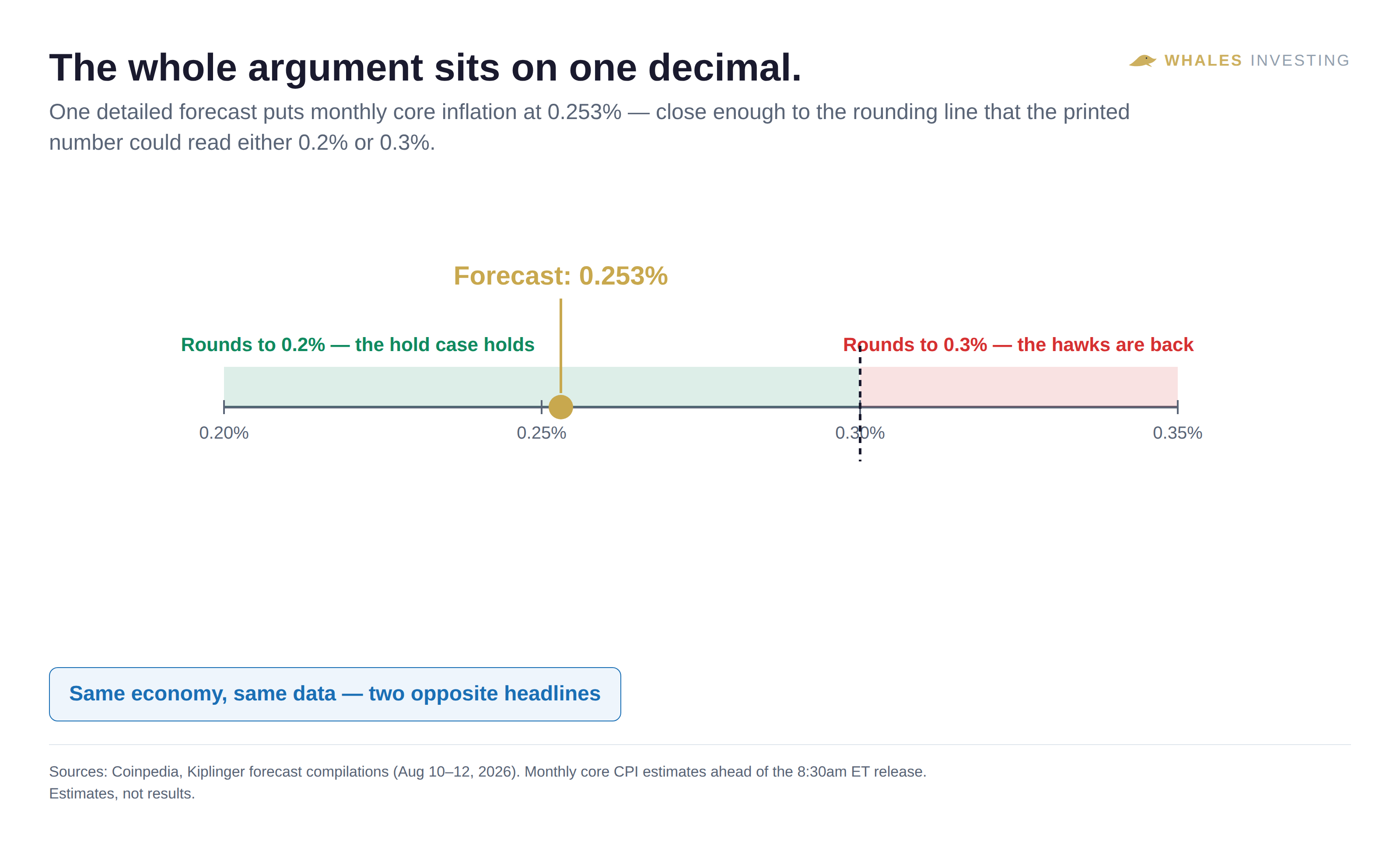
Here’s the mechanic that matters. One detailed bottom-up forecast puts monthly core inflation at 0.253 percent. Anything that rounds to 0.2 confirms what the market has already priced: pressure fading, the Fed free to sit still. Anything printing 0.3 or higher signals inflation re-accelerating inside the Fed’s preferred measure, and the three officials who wanted a hike in July get their case back before lunch. A fraction of a percentage point, and two entirely different autumns.
Step back from the decimal and a bigger pattern shows itself. Everything on that list — the Fed’s decision, the market’s reaction, the tape you can trade — happens in public, where the price already reflects what everyone knows. The largest value creation of this cycle has been happening somewhere else entirely. Anthropic is the clearest illustration: a company that has grown into one of the most valuable enterprises on earth without ever trading a share publicly. That reality is where the first item on my desk this week begins.
SPONSORED
Venture capitalists call a private company worth over $1 billion a unicorn.
$10 billion and it's a decacorn.
$100 billion is a hectocorn.
But what do you call a private company worth over a trillion dollars?
Anthropic is there, right now.
The first of its kind.
It's worth more than every American airline — combined.
It's even bigger than the U.S. defense budget …
Anthropic's annualized revenue grew by 80 times in the first quarter.
They've already filed the paperwork for an IPO …
Some estimates say they are going public as early as October.
Now, here's what's really exciting.
You can take a stake in this IPO …
Right now.
Today.
Before it goes public.
For a chance to see gains on day one.
Back to this morning — because the people betting real money on the number disagree with the people forecasting it.
Two. The traders are calmer than the economists
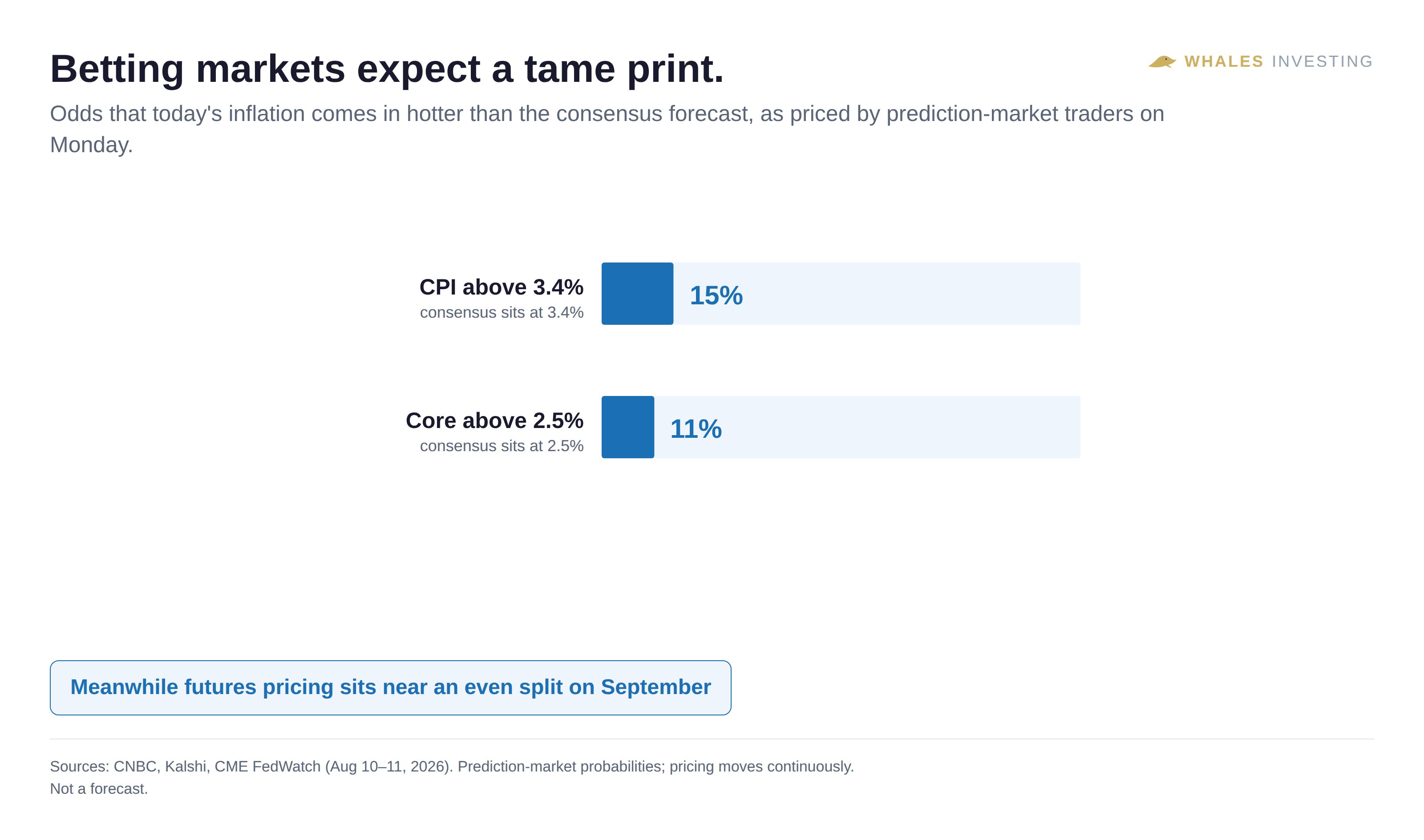
There’s an interesting split ahead of the release. Prediction-market traders put only about a 15 percent chance that headline inflation comes in above the 3.4 consensus, and roughly 11 percent that core runs above 2.5. In other words, the people wagering on the outcome expect a tame print — noticeably calmer than the professional forecasts clustering right at the rounding line. Yet futures pricing on September sits near an even split. Somebody is going to be repriced this morning.
That gap is a reminder of how these things actually get priced: not by the number itself, but by who positioned ahead of it. The same logic governs how new companies reach the market. By the time a business rings the opening bell, the early years of compounding have already been distributed — to founders, to venture funds, to whoever had access before the listing. Ordinary savers get the chart after the steep part. A handful of offerings now use SEC-qualified structures to open that earlier stage to anyone, and one of them is on my desk this week.
SPONSORED
I remember when Roku went public. September 2017. $400 million in revenue, still losing money.
They didn't make TVs. They made software... an operating system that sat inside other companies' TVs. You'd buy a TV and Roku was already on it.
Every show watched, every ad served — Roku took a cut.
The stock opened at $14. Four years later it hit $479 — a 3,300% return. $10,000 turned into more than $340,000. That's Roku's history — it doesn't predict what any other stock will do.
A small Chicago startup runs a similar playbook... an operating system for phones that sits inside the device and takes a cut of every ad that runs on it. And then shares that cut with the user.
The difference is the market size. Roku had 270 million smart TVs to work with. This startup has 7 billion smartphones...
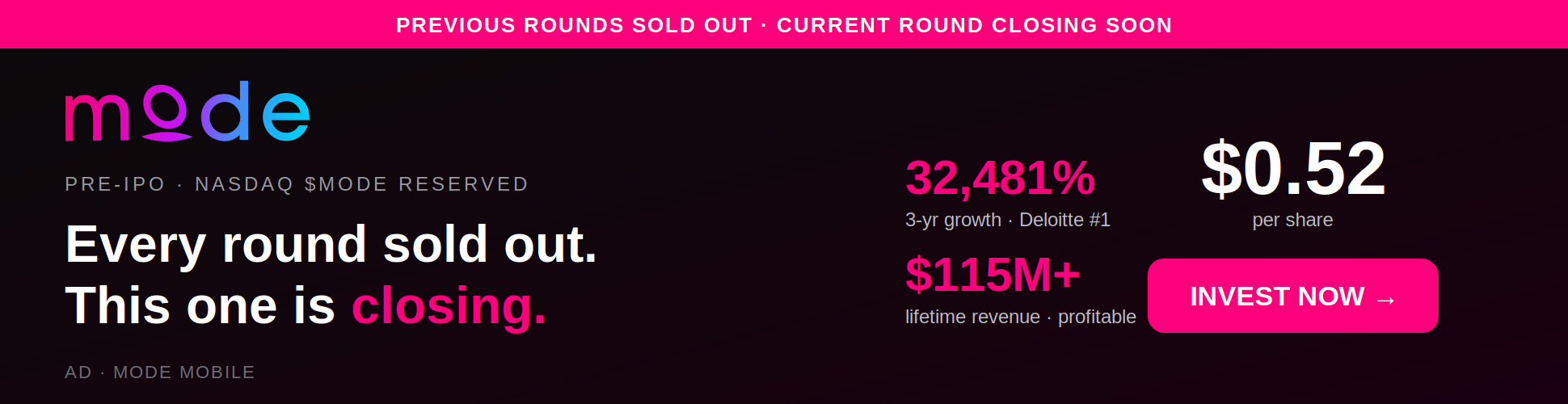
Right now, shares are $0.52. The NASDAQ ticker is reserved. The SEC has qualified the offering. Anyone can invest.
On August 14, the opportunity to invest at $0.52 closes — and this price disappears forever.
Please read the offering circular and related risks at invest.modemobile.com. This is a paid advertisement for Mode Mobile's Regulation A+ Offering.
Mode Mobile recently received their ticker reservation with Nasdaq ($MODE), indicating an intent to IPO in the next 24 months. An intent to IPO is no guarantee that an actual IPO will occur.
The Deloitte rankings are based on submitted applications and public company database research, with winners selected based on their fiscal-year revenue growth percentage over a three-year period.
Pro forma revenue and EBITDA, includes full year numbers of the businesses acquired throughout 2025.
One more thing to keep in view before the number prints, and it isn’t in the report at all.
Three. Today’s data looks backward. Oil doesn’t.
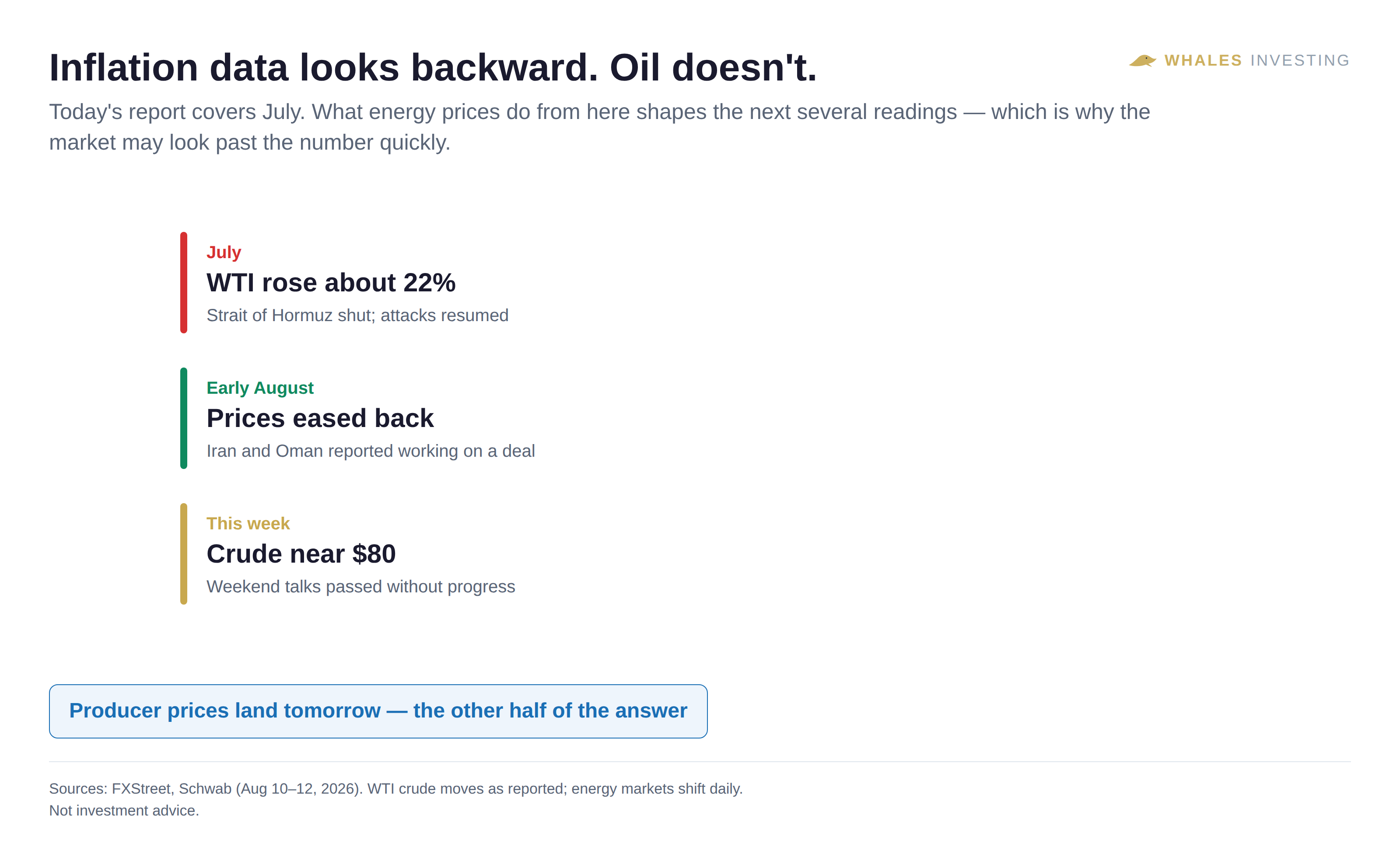
Inflation readings describe a month that has already finished. July’s report captures a stretch when crude climbed roughly 22 percent as the Strait of Hormuz stayed closed and attacks resumed. Prices then eased in early August on reports that Iran and Oman were working toward an arrangement — before the weekend passed without progress and crude drifted back toward $80. That is why the market may glance at this morning’s figure and move on: energy is setting the next several readings while this one describes the last.
Which raises the harder question — the one behind every data release this summer. If the dollar in your account buys less each year while the official readings stay technically acceptable, the erosion never announces itself. It shows up in the gap between what you saved and what it covers. That larger picture is the subject of the last presentation on my desk this week.
SPONSORED
Have you seen this video yet?

If you haven't seen it yet, access our exclusive presentation - "Midnight in America" here.
I've kept this presentation simple...
So ANYONE could understand exactly what to do to take advantage of this major investment opportunity.
A number that can print two ways from the same economy is a reminder of how thin the ground is under a confident market. The decimal decides the headline. It doesn’t decide what your money buys.

The Setup. Where things stand this morning: July consumer prices are due at 8:30 ET, with headline expected near 3.4 percent year over year (from 3.5) and core near 2.5 (from 2.6). Monthly core is the swing factor — one detailed forecast puts it at 0.253 percent, on the rounding line, with 0.3 the level that revives the hike case. Prediction-market traders price only about 15 percent odds of headline above 3.4 and 11 percent of core above 2.5, while futures sit near an even split on September. Producer prices follow tomorrow, forecast near 4.9 percent. Crude has drifted back toward $80. Retail sales close the week Friday.
The Bottom Line
Two Fridays of data have swung the September debate twice, and this morning’s release can swing it again on a rounding convention. That’s what a data-dependent central bank with no forward guidance produces: not a trend anyone can lean on, but a series of coin-flips dressed as conclusions. The market has already spent last week’s relief; today it finds out whether the cheque cleared.
Underneath the noise, the durable facts haven’t moved. Energy is still setting the direction of prices, producer costs are still running hotter than consumer ones, and the biggest businesses of this cycle are still compounding out of public view. Those three things will matter long after this morning’s decimal is forgotten.
Protect first. Position for the regime you’re actually in, and don’t confuse a rounding threshold with a turning point. Because the capital you keep is the only capital that compounds.
— Hawk